
Bullpadel
XPLO PP26
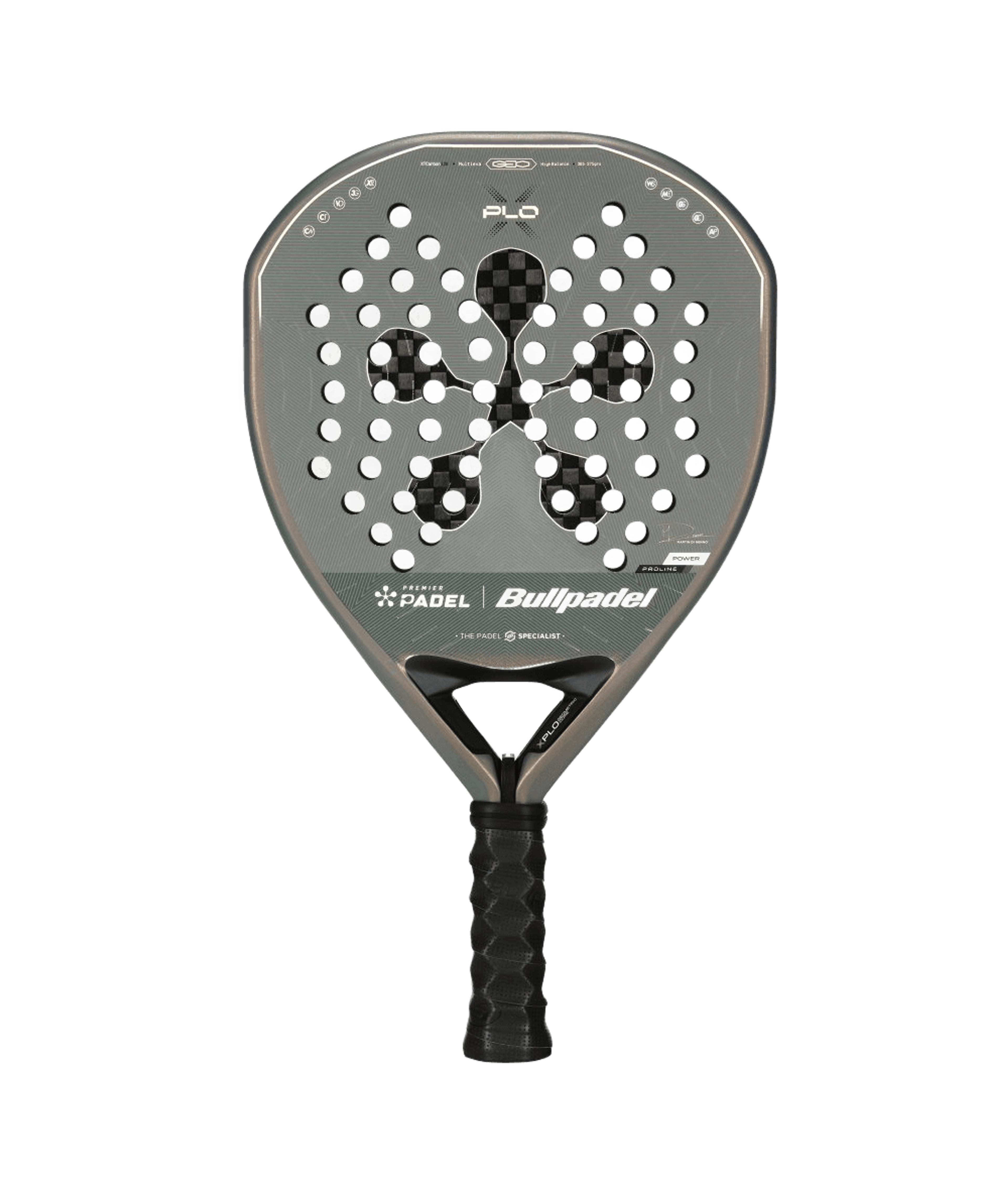
A Premier Padel-spec diamond built around the Geometric Shape frame — for attackers who end points, not extend them.
Where to buy
As an Amazon Associate, Padelhost earns from qualifying purchases at no extra cost to you. This never affects our recommendations.
Amazon
Check price & availability
Link opens in a new tab · we may earn a commission
Full spec breakdown
Listing checked at publish date
Highlights
What makes this racket stand out
Geometric Shape frame enlarges the hitting surface at the 2 and 10 o'clock positions, giving a bigger sweet spot than a conventional diamond without sacrificing high-balance punch on overheads.
High balance point shifts weight toward the head — smashes and bandejas carry real momentum, but the racket demands consistent timing or off-centre hits lose energy sharply.
Premier Padel collection spec means this is built to the same performance brief as what's used on the professional tour — not a cosmetic upgrade over the standard XPLO line.
The feel
How it's built to play, by shape, core and construction — rated low / mid / high rather than on a false 1–10 scale. Higher isn't always better; it depends on the game you want.
Balance — where the weight sits
Even
Handle / low
Head / high
The spec sheet
Year
2026
Shape
Diamond
Level
Professional
Style
Power
Balance
High
Our verdict
What the shape, core and construction tell us about how this racket is built to play.
The short version
The XPLO PP26 is the racket for the left-side attacker who has outgrown standard diamonds but still wants a slightly larger target zone at the top of the frame — the Geometric Shape delivers that without softening the high-balance aggression. The Hexature stiffness and head-heavy swing weight make it genuinely dangerous on overheads, but anyone without consistent net positioning will feel the weight working against them more than for them. If elbow health is a concern at all, look elsewhere in the XPLO family.
Strengths
Left-side players with reliable overhead technique who want to finish points with authority from the net zone.
Advanced club or competitive players who generate their own pace and need a stiff, high-balance frame to amplify — not assist — their game.
Keep in mind
Players with elbow or shoulder sensitivity — the combination of high balance, diamond shape, and a stiff carbon construction transmits significant vibration on mishits.
How it's built to play
The XPLO PP26 sits at the top of Bullpadel's power-oriented XPLO line, distinguished by its Premier Padel specification and the Geometric Shape frame that sets it apart from every other diamond in the range. Where a conventional diamond concentrates the sweet spot into a narrow high zone, the GeoShape widens the frame at the upper shoulders — up to 541 cm² of hitting surface — so the power band is broader without moving the weight distribution away from the head. At €379.99, this is a professional-tier tool that makes a very specific promise: explosive overhead play with a margin of error that standard diamonds don't offer.
The Geometric Shape construction is the defining decision here. By expanding the frame at 2 and 10 o'clock, Bullpadel increases the effective contact area without dropping the balance point — you still get the head-heavy momentum that makes a diamond racket dangerous on smashes, but the zone where that momentum translates cleanly into the ball is wider. Paired with the Hexature internal frame — a hexagonal tube that adds 3mm of wall thickness to the structure — the XPLO PP26 resists torsion even when the strike lands toward the frame edge, which matters on a wider-shouldered shape where the outer hitting zones see more action. The Geometric Core inside mirrors the frame geometry, using contoured EVA to match the enlarged surface and ensure the foam's energy return is consistent from centre to shoulder. What you get is a diamond that doesn't punish the occasional off-centre overhead the way a traditional narrow-head design would.
"Geometric Shape plus Hexature plus Geometric Core: three systems that widen the effective hitting zone without softening the attacking intent — a wider frame that still hits hard."
High balance makes itself felt immediately on attacking strokes. The XPLO PP26 swings through an overhead with real inertia — the head carries through the shot rather than requiring you to muscle it, which means bandejas and smashes feel authoritative without demanding maximum effort on every swing. From the left side at net, that translates directly into points: the racket does what you intend when you're set up correctly. The Geometric Shape's extra width also pays off on volleys that catch the upper shoulder — shots that a conventional diamond would bleed power from land with more solidity here.
"The Geometric Shape's extra width turns near-miss volleys into usable shots — the consistency under pressure is the PP26's main argument over a conventional diamond."
What you give up is maneuverability under pressure. When an opponent forces a low, rushed defensive shot, the head-heavy balance becomes a liability — the racket is slower to redirect. The stiff Hexature frame also means every mishit communicates itself clearly up the arm. This is not a racket for a 60-minute warm-up session with a nagging elbow.
FAQ
How does the XPLO PP26 compare to the XPLO Argentina 26?
Both rackets share the XPLO line's high-balance, power-first DNA, but the PP26 carries the Premier Padel specification — reflecting the construction brief used at professional tour level. The Argentina 26 sits €20 lower at €359.99 and likely uses a comparable but slightly less refined build. If you're playing competitive club padel and want the closest spec to what's on the professional circuit, the PP26 is the call. If you want the XPLO's attacking character without the premium, the Argentina 26 is a sensible step down.
How does the XPLO PP26 compare to the Bullpadel Vertex line?
The Vertex (the Tello signature line) and the XPLO share a power-first philosophy and high balance, but the XPLO's Geometric Shape is the key differentiator. Where the Vertex uses a more conventional diamond outline, the XPLO's widened upper shoulders give a broader effective sweet spot. The Vertex with its X-Tend Carbon face tends to feel more explosive and direct on a perfectly timed central strike; the XPLO is more consistent across a wider hitting zone. Advanced players who hit cleanly every time may prefer the Vertex's precision; players who want slightly more margin on tour-level pace should look at the XPLO PP26.
Is the XPLO PP26 suitable for a right-side player?
No. The high balance and diamond Geometric Shape are engineered for left-side attacking play — overhead smashes, bandejas, and finishing volleys. A right-side player needs rapid racket redirection for defensive resets and consistent mid-court volleys, and the XPLO PP26's head-heavy swing weight works directly against that. A teardrop or round racket with low-to-medium balance will serve the right side far better.
What does the Geometric Shape actually change compared to a standard diamond?
A standard diamond concentrates the sweet spot into a compact high zone — powerful when you catch it, unforgiving when you don't. The XPLO's Geometric Shape widens the frame at the upper shoulders (2 and 10 o'clock positions), expanding the contact area to up to 541 cm². In practice, this means shots that land toward the upper outer edges of the face — common on smashes where footwork isn't perfect — still transfer energy cleanly rather than dying. It's a meaningful real-world difference, not a marketing shape tweak.
Should I avoid the XPLO PP26 if I have elbow problems?
Yes. The XPLO PP26 combines multiple high-risk factors for lateral epicondylitis: diamond shape, high balance, stiff Hexature carbon frame construction, and a high-density EVA core. Each of those individually increases vibration transmission to the arm — together, they add up to one of the more demanding elbow loads in the Bullpadel range. Players returning from elbow issues or with ongoing arm sensitivity should look at a round or teardrop model with low balance, soft foam core, and fiberglass face — such as the Bullpadel Flow line — which sits at the opposite end of the arm-friendliness spectrum.
Ready to add this to your game?
A Premier Padel-spec diamond built around the Geometric Shape frame — for attackers who end points, not extend them.
Link opens in a new tab · we may earn a commission