
Bullpadel
VERTEX JR BOY 26
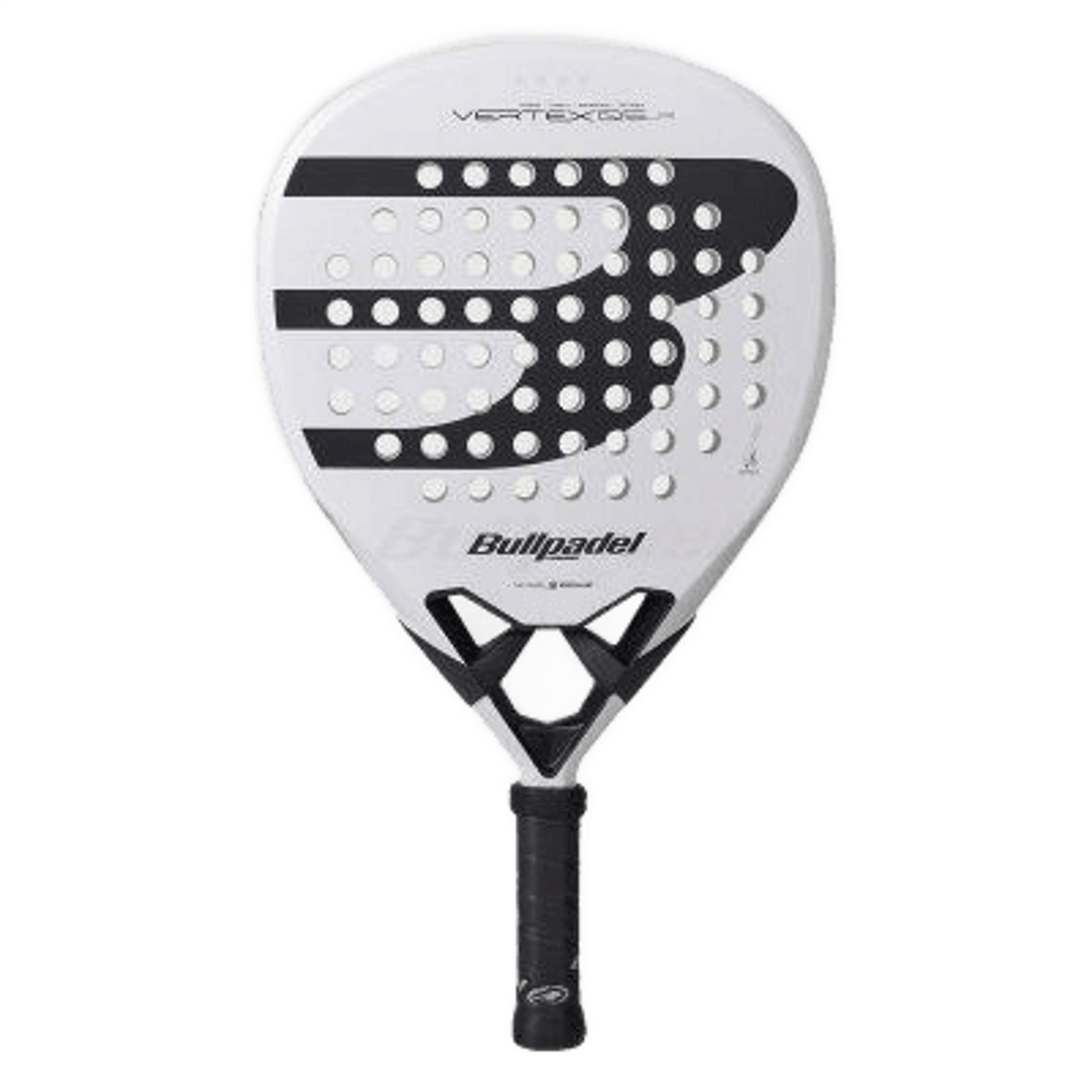
A full diamond built to scale with a junior's game — for young attackers who are ready to finish points, not just survive rallies.
Where to buy
As an Amazon Associate, Padelhost earns from qualifying purchases at no extra cost to you. This never affects our recommendations.
Amazon
Check price & availability
Link opens in a new tab · we may earn a commission
Full spec breakdown
Listing checked at publish date
Highlights
What makes this racket stand out
Diamond shape with medium balance — delivers overhead power without the extreme head-heaviness of adult diamond models, keeping swing speed manageable for younger players
Evalastic rubber core absorbs vibration better than standard EVA — important for arms that are still developing and facing repeated high-impact contact
Polyglass fiberglass face flexes on contact, giving the ball a trampoline assist that helps juniors generate pace without needing adult swing force
The feel
How it's built to play, by shape, core and construction — rated low / mid / high rather than on a false 1–10 scale. Higher isn't always better; it depends on the game you want.
Balance — where the weight sits
Even
Handle / low
Head / high
The spec sheet
Year
2026
Shape
Diamond
Level
Advanced
Style
All Around
Balance
Medium
Core
Vertex core (Evalastic rubber inner, Polyglass fiberglass outer)
Face
Polyglass fiberglass
Our verdict
What the shape, core and construction tell us about how this racket is built to play.
The short version
The Vertex JR Boy 26 suits the junior who is already winning points with their overhead, plays predominantly on the left, and needs a racket that will still challenge them twelve months from now rather than one they'll outgrow next month. The Evalastic and Polyglass combination keeps the arm risk lower than a full adult Vertex — but it's still a diamond, and any young player not yet hitting consistently will find it frustrating before they find it useful.
Strengths
Junior players aged roughly 10–14 who already play consistently from mid-court and are developing an attacking left-side game
Young players transitioning from a beginner round racket toward adult equipment — this bridges the gap without throwing them into a full adult diamond
Keep in mind
Juniors who are still learning basic technique and need maximum forgiveness — the diamond shape punishes mishits, and a round or teardrop junior frame will serve them better
How it's built to play
The Vertex JR Boy 26 takes Bullpadel's flagship diamond concept and scales it specifically for skilled junior players. At a glance it looks like a miniaturised adult Vertex — diamond shape, Carbon Tube frame, Vertex core branding — but the material choices underneath are deliberately softer than the adult line, which is the right call. A junior swinging a full-stiffness EVA and 18K carbon racket is an injury waiting to happen. This version keeps the attacking shape while pulling back on the harshness.
The frame is built with Bullpadel's Carbon Tube construction — 100% bidirectional carbon around the perimeter — which gives the racket torsional rigidity well above what a fibreglass or aluminium junior frame can offer. The Polyglass fiberglass face is the first concession to junior-appropriate comfort: it flexes at contact, so the ball spends a fraction longer on the face before releasing, reducing peak impact load on the arm and generating ball speed even on slower junior swings. The Evalastic rubber inner core is the second: denser and more elastic than standard foam, it cushions impact without the dead, disconnected feel of very soft beginner foams.
"Carbon Tube rigidity, Polyglass forgiveness, Evalastic cushion: the construction sits between a mid-range adult all-around and a full junior comfort racket — which is precisely where a skilled 12-year-old should be."
On court, the diamond shape and medium balance combination deliver what they promise: overhead smashes land with genuine weight, and volleys at the net have more authority than anything a round junior frame produces. The sweet spot sits high in the head, so juniors who have started to trust their technique and swing through the ball will feel the reward clearly. The Polyglass face adds a slight spring that helps on slower balls.
"This racket does not hide errors — it reports them. That's valuable for development, but only if the player can handle the feedback without losing confidence."
The honest limitation is the diamond's consistency tax: mishits above or below the sweet spot drop off sharply, and a junior in the middle of a technical correction phase will feel that every session. This racket does not hide errors; it reports them. That's valuable for development, but only if the player can handle the feedback without losing confidence.
FAQ
How does the Vertex JR Boy 26 compare to the adult Bullpadel Vertex 05?
The adult Vertex 05 uses a harder MultiEVA core and X-Tend Carbon face — both stiffer and more demanding than the JR Boy 26's Evalastic rubber and Polyglass fiberglass combination. The junior version is noticeably more forgiving at contact and produces less vibration, which matters for developing arms. The diamond shape and Carbon Tube frame are shared, so the attacking identity is the same — but the JR is more accessible and less likely to cause arm issues during high-volume junior training.
Should I choose the Vertex JR Boy 26 or a teardrop junior racket for my child?
If your child is already playing competitive junior padel, hits consistently from mid-court, and has started developing an attacking left-side game, the Vertex JR Boy 26 gives them a racket that rewards that progress. If they're still developing basic stroke mechanics or play fewer than two sessions a week, a teardrop junior frame will be more forgiving on mishits and less frustrating to use day-to-day. The diamond shape here is not a beginner tool — it's for juniors who are ready to be held to a higher standard.
Is the Vertex JR Boy 26 safe for a young player's arm?
Compared to full adult diamond rackets, the risk profile here is lower. The Evalastic core absorbs more vibration than standard EVA foam, and the Polyglass face flexes at contact rather than transmitting peak force directly to the arm. That said, diamond shapes combined with high-intensity junior training can still create repetitive strain. If your child plays more than three times a week or has had any arm discomfort previously, it's worth discussing with a coach before committing to a diamond — a teardrop or round junior model would reduce risk further.
What does 'Vertex core' mean on a junior racket, and is it the same as in adult models?
The Vertex core label on the JR Boy 26 refers to an internal frame structure that distributes weight around the diamond shape to reduce torsion and vibration at contact. In adult Vertex models, this is paired with a hard MultiEVA foam. In the junior version, the core pairing is Evalastic rubber — softer, more elastic, and better at cushioning impact. So the structural concept is similar, but the material execution is tuned down in hardness specifically for junior use.
What age or size range is the Vertex JR Boy 26 designed for?
The '26' in the name refers to the racket length in inches (approximately 66cm), which is the standard junior size for players roughly aged 10–14, depending on height. It is not a full adult-length racket (typically 45.5cm in padel terms), so adult players cannot use it as a substitute. The size is appropriate for junior competitive play; if your child is already using adult equipment comfortably, they may have outgrown the junior sizing and should move directly to a lightweight adult model.
Made for elbow-conscious players.
A full diamond built to scale with a junior's game — for young attackers who are ready to finish points, not just survive rallies.
Link opens in a new tab · we may earn a commission