
Bullpadel
RACKET PEARL 26
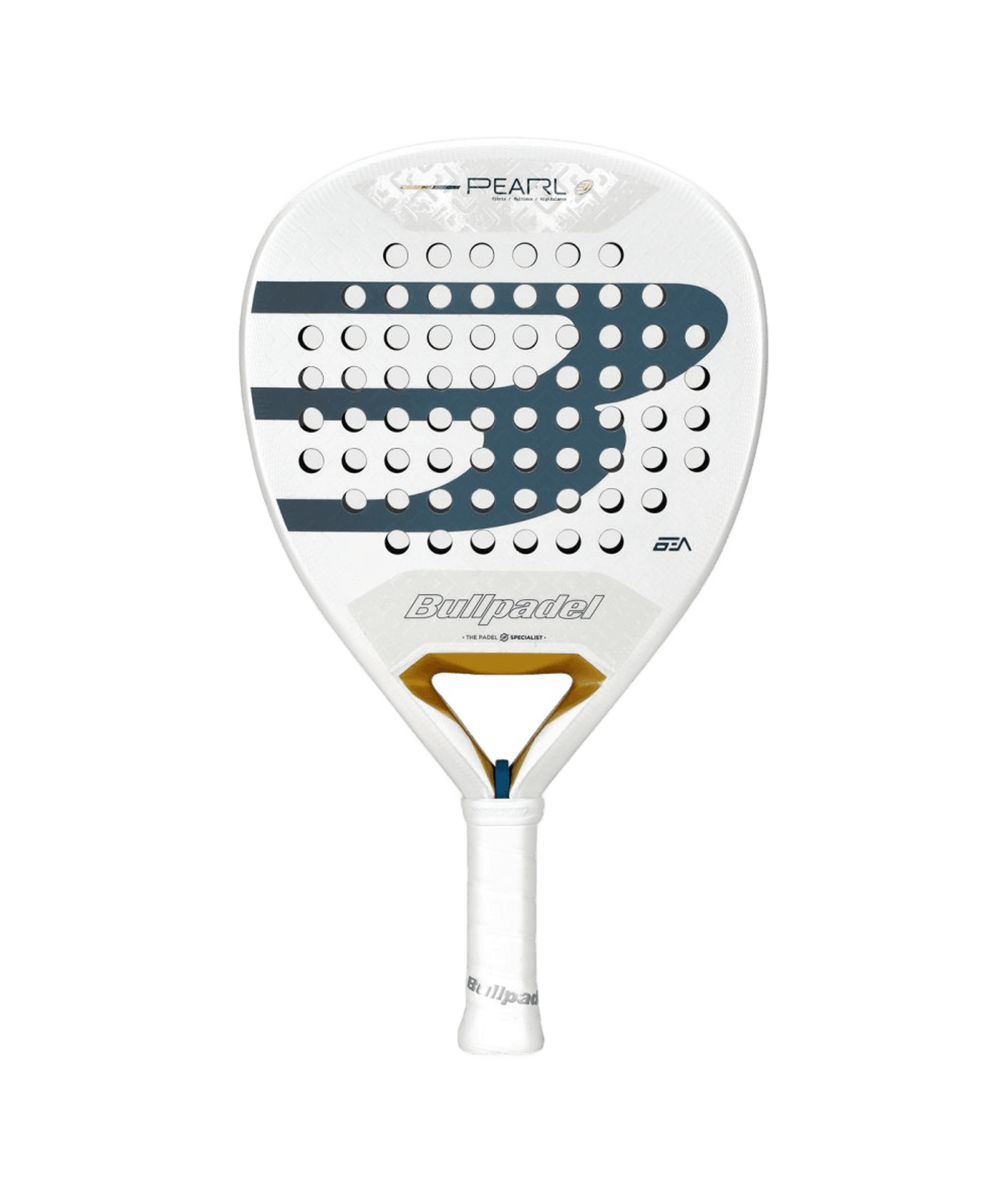
A diamond frame that generates overhead power without the punishing stiffness most attackers accept as the price of pace.
Where to buy
As an Amazon Associate, Padelhost earns from qualifying purchases at no extra cost to you. This never affects our recommendations.
Amazon
Check price & availability
Link opens in a new tab · we may earn a commission
Full spec breakdown
Listing checked at publish date
Highlights
What makes this racket stand out
Fibrix hybrid face (glass fibre + carbon) gives more flex than a full-carbon face — attacking power with a softer landing on off-centre hits
MultiEVA three-layer core rewards both explosive smashes and slower, controlled exchanges from the same racket
Custom Weight system allows up to 12g of additional mass and ~1cm balance shift, so you can tune head-heaviness to match your style and strength
The feel
How it's built to play, by shape, core and construction — rated low / mid / high rather than on a false 1–10 scale. Higher isn't always better; it depends on the game you want.
Balance — where the weight sits
Even
Handle / low
Head / high
The spec sheet
Weight
355–365g
Year
2026
Shape
Diamond
Level
Advanced
Style
Power
Balance
High
Core
MultiEva
Face
Fibrix
Thickness (mm)
38
Our verdict
What the shape, core and construction tell us about how this racket is built to play.
The short version
The Pearl 26 is the right choice for an advanced left-side attacker who wants diamond power without going all-in on a carbon face — the Fibrix construction buys meaningful forgiveness on mishits without blunting the racket's ability to finish points overhead. At 355–365g it's unusually light for an attacking diamond, which helps with racket speed but means stronger players may need the Custom Weight system to get the stability they're used to. Anyone with elbow history should look elsewhere: a high-balance diamond, however well-dampened, is not a low-risk setup.
Strengths
Advanced left-side players who want diamond-level power on overheads and bandejas without committing to a full-carbon face
Attackers who play varied-pace points and need a core that handles both explosive finishing shots and reset volleys without losing feel
Keep in mind
Players with elbow or shoulder sensitivity — the high balance and diamond shape combine to increase vibration transmission, and no amount of Vibradrive fully offsets a head-heavy diamond on repeated off-centre contact
How it's built to play
The Pearl 26 is Bullpadel's attacking diamond aimed at players who want genuine power from the left side but aren't ready to sacrifice all comfort for it. At 355–365g it sits on the lighter end of the advanced diamond category — lighter than most full-carbon power rackets at this shape — and the Fibrix face is doing real work to keep the feel accessible. The result is a racket that hits harder than its weight suggests but pulls back just enough from the stiffest end of the power spectrum to stay usable across a long session.
The Fibrix face blends flexible glass fibre with rigid carbon filaments and bonds them with a more elastic resin than standard carbon layups use. In practice, the face bends slightly at contact — not as much as pure fiberglass, but enough to create a brief dwell moment that a 3K or 12K carbon face would eliminate entirely. That dwell adds margin on shots that aren't perfectly centred, which matters on a diamond where the sweet spot sits high and mishits happen. The MultiEVA core is a three-layer sandwich: two outer layers of higher-density EVA that snap back hard on fast, aggressive strikes, and a softer inner layer that absorbs energy on slower balls rather than sending it straight back as vibration.
Vibradrive adds a high-elasticity rubber insert through the handle axis, breaking the vibration path before it reaches the wrist. The Trinamic internal heart geometry — an inverted triangular structure with diagonal inlets — distributes impact load along triangular surfaces rather than concentrating it at a single point. Air React Channel at the throat reduces drag through the swing arc and stiffens the four-arm structure on impact.
"Fibrix plus MultiEVA: you get pace from the high balance without the shock penalty of a full-carbon diamond."
From the left side, the Pearl 26 generates real pace on overheads. The high balance builds momentum through the swing arc and the stiff Fibrix face transfers that energy cleanly. What's different here compared to a full-carbon diamond is the response on balls you don't catch perfectly. On a TriCarbon or X-Tend Carbon face a mis-hit overhead loses pace sharply and sends a clear signal up the arm. The Pearl 26 gives back slightly more on the same shot — not forgiving enough to pretend the mistake didn't happen, but forgiving enough that the point isn't immediately lost.
"Not forgiving enough to pretend the mistake didn't happen, but forgiving enough that the point isn't immediately lost — that's the actual promise of Fibrix over full carbon."
At 355g the racket moves quickly for a diamond. The Custom Weight system addresses overhead power directly — adding the full 12g of plates shifts both the weight and the balance point, and experienced players will notice a genuine change in how the head loads through the swing.
FAQ
How does the Pearl 26 compare to the Pearl 25?
The Pearl 26 introduces the Trinamic internal heart geometry — an inverted triangular structure that distributes impact forces more evenly across the frame — which wasn't present in the Pearl 25. The core is now explicitly described as a three-layer MultiEVA sandwich, adding more detail to what was a broadly similar construction in the 25. The Custom Weight system has also been updated to accommodate up to four plates (12g total) rather than three, giving players more range to tune balance. If you played the Pearl 25 and wanted more stability on your hardest smashes, the 26 gives you more tools to find it without buying a heavier racket.
Should I choose the Pearl 26 or the Bullpadel Hack 04?
The Hack 04 is the more uncompromising attacking diamond — it uses a TriCarbon or X-Tend Carbon face, which is stiffer and more direct than the Pearl 26's Fibrix hybrid. That means more immediate power on overheads but less margin on off-centre contact and more vibration reaching the arm. The Pearl 26's Fibrix face adds a small amount of flex at contact that makes it easier to play across a full session without fatigue. If you have consistent technique and prioritise maximum power above everything else, the Hack 04 is the logical step up. If you want diamond-level pace but find full-carbon faces unforgiving or you're playing long sessions, the Pearl 26 is the better fit.
Is the Pearl 26 suitable for players with elbow sensitivity?
Not really. The diamond shape places weight high in the head, the high balance increases the force transmitted through the arm on impact, and although Vibradrive absorbs a significant portion of handle vibration, those factors together create a higher-risk profile for anyone with elbow or shoulder history. The Fibrix face helps by adding some flex that a full-carbon face wouldn't provide, and MultiEVA's inner soft layer reduces vibration on slower shots — but these are partial mitigations, not solutions. A player managing elbow sensitivity should look at Bullpadel's round or teardrop options with CloudEva cores and lower balance points instead.
What does the Custom Weight system actually do on the Pearl 26, and should I use it?
The Pearl 26's Custom Weight system uses gel or aluminium plates (3g each) that slot into designated compartments at the top of the racket. Adding all four shifts the total weight up by 12g and moves the balance point approximately 1cm higher — making the head heavier and increasing power on overhead swings while slowing the racket slightly through the air. It's worth experimenting with if you find the racket at stock weight feels too light or lacks the planted feeling on your hardest shots. Start with one or two plates and assess the difference over a session — adding all four at once changes the swing dynamic significantly, and not every player will want that.
What does Fibrix mean in practice — is it closer to fiberglass or carbon?
Fibrix sits between the two but leans toward the carbon side of the spectrum. It blends flexible glass fibres with rigid carbon filaments and uses a more elastic resin than standard carbon constructions, so the face has slightly more give at contact than a monocarbon face would. In playing terms: you get a crisper, more direct response than a pure fiberglass face — the ball leaves faster — but there's a small amount of flex that softens the feel on mishits and reduces vibration compared to full carbon. Think of it as a carbon face with the sharpest edges taken off.
Ready to add this to your game?
A diamond frame that generates overhead power without the punishing stiffness most attackers accept as the price of pace.
Link opens in a new tab · we may earn a commission