
Bullpadel
IONIC POWER 26
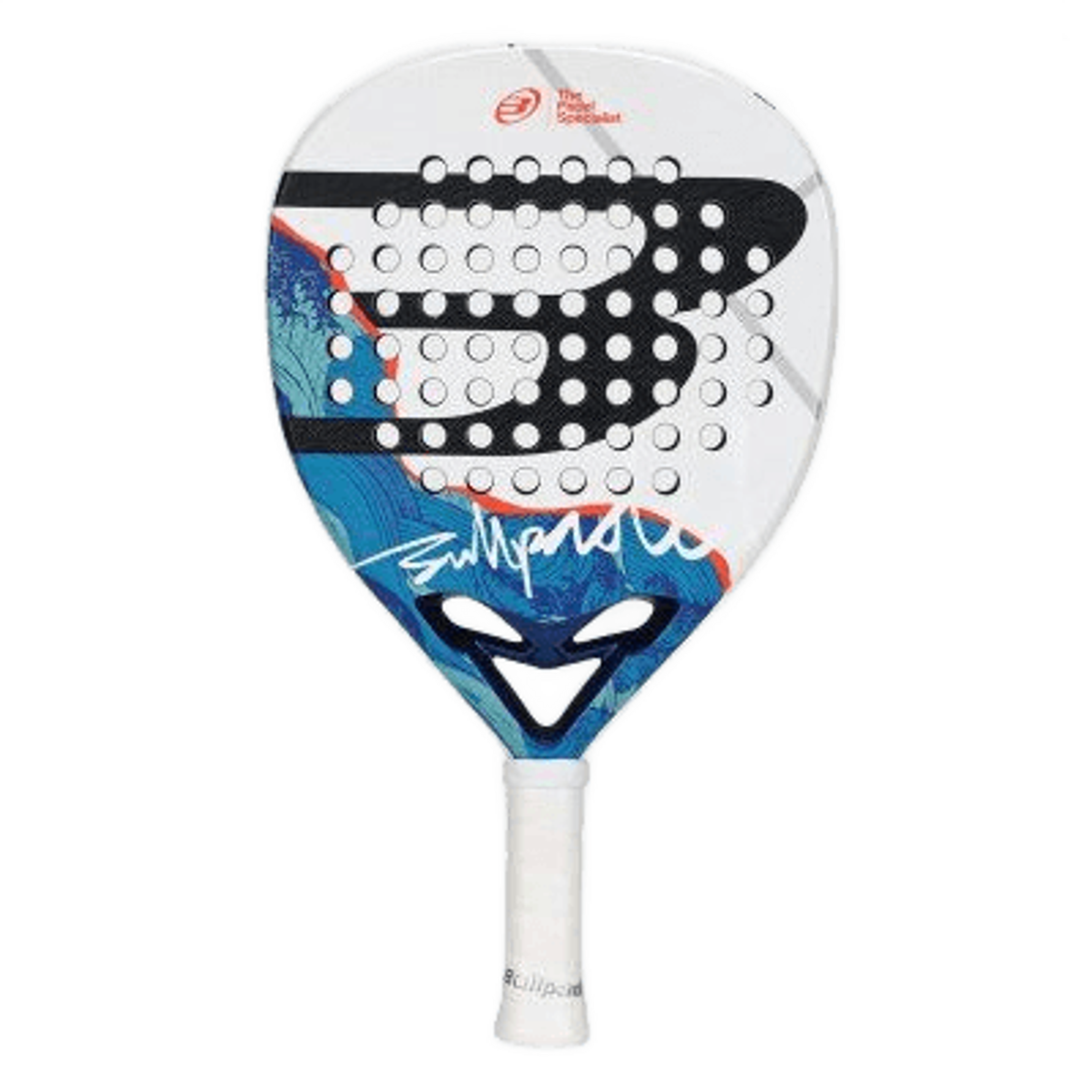
A diamond-shaped attacker that brings left-side firepower to intermediate players without demanding a professional's technique.
Where to buy
As an Amazon Associate, Padelhost earns from qualifying purchases at no extra cost to you. This never affects our recommendations.
Amazon
Check price & availability
Link opens in a new tab · we may earn a commission
Full spec breakdown
Listing checked at publish date
Highlights
What makes this racket stand out
Diamond shape with high balance pushes the sweet spot toward the top of the face — where overhead smashes and finishing volleys happen
Glaphite face blends carbon stiffness with fiberglass flex, giving a crisper response than pure fiberglass without the arm punishment of full carbon
MultiEVA's dual-density core handles both fast and slow balls differently — the outer layer snaps back on hard strikes, the softer inner layer cushions and controls slower exchanges
The feel
How it's built to play, by shape, core and construction — rated low / mid / high rather than on a false 1–10 scale. Higher isn't always better; it depends on the game you want.
Balance — where the weight sits
Even
Handle / low
Head / high
The spec sheet
Year
2026
Shape
Diamond
Level
Intermediate
Style
Power
Balance
High
Core
MultiEVA
Face
Glaphite
Our verdict
What the shape, core and construction tell us about how this racket is built to play.
The short version
The Ionic Power 26 is the right step for an intermediate left-side player who's outgrown an all-around teardrop and wants to build an attacking identity — the Glaphite face keeps the transition from being brutal, but the diamond shape still demands that you show up with a clear intention to hit through the ball. The honest limitation is arm health: three high-risk factors in one frame means players with any elbow history should look at the Ionic Control 26 instead. If your elbow is fine and your overhead is coming together, this racket will accelerate that development.
Strengths
Intermediate left-side players developing an attacking game who want overhead power without jumping straight to a full professional diamond
Club players transitioning from an all-around teardrop to a more offensive setup — the Glaphite face softens the step up in stiffness
Keep in mind
Players with elbow sensitivity or a history of tennis elbow — the diamond shape, high balance, and Carbon Tube frame combine enough high-risk factors to make this a poor choice for arm-sensitive players
How it's built to play
The Ionic Power 26 sits at an interesting crossroads in Bullpadel's lineup: it's a diamond racket priced and specced for intermediate players rather than club elites. That's a deliberate move. The shape and high balance demand attacking intent, but the Glaphite face and MultiEVA core pull the difficulty curve back toward manageable. At €179.99, it asks the buyer to commit to a playing style — left-side attack — without requiring tournament-level consistency to get something out of it.
The frame is built on Bullpadel's Carbon Tube construction — 100% bidirectional carbon wrapped around the perimeter — which means the structure itself doesn't flex under load. That rigidity is what makes the Ionic Power feel planted and direct on contact rather than springy; energy goes into the ball, not into bending the frame. XForce reinforces this further by stiffening the internal structure, so the racket holds its geometry on off-centre hits where cheaper builds at this price point would feel hollow or unstable.
The face is Glaphite — Bullpadel's proprietary blend of carbon fibre and fibreglass — and it's doing real work here. Pure carbon at this weight and balance would transmit vibration aggressively; the fibreglass component introduces just enough flex to soften the contact without killing the direct feedback the diamond shape is supposed to deliver. Inside, the MultiEVA core runs two densities: a compact outer layer that rebounds fast against hard-hit balls, and a lower-density inner layer that slows the rebound on softer touches. The 3D Grain surface texture across the face adds friction at contact, helping generate topspin and slice on attacking shots without needing extreme wrist speed.
"Glaphite blends carbon stiffness with fiberglass flex — pure carbon at this weight and balance would transmit vibration aggressively; this doesn't."
On the left side, this racket does what it promises. Overhead smashes carry genuine weight — the high balance loads the head through the swing arc and the Carbon Tube frame delivers that energy cleanly at the top of the face. The sweet spot is unforgiving if you're late or off-target, which is the honest reality of any diamond shape, but intermediate players who have groomed a consistent toss action will find the power output noticeable compared to a teardrop at the same price.
"This is a finisher's racket, used best by someone who already knows when to attack — the high balance slows the defensive reaction volleys that right-side play demands."
Where it earns its keep is in the mid-paced exchange game — the MultiEVA core's inner layer means it doesn't feel like a one-trick power tool on slower balls. Resets and drop volleys are controllable, not dead. Right-side players testing this racket should put it down: the high balance slows the quick defensive reaction volleys that the right side demands.
FAQ
How does the Ionic Power 26 compare to the Ionic Power 25?
The Ionic Power 26 introduces the Glaphite face, replacing whatever face material the 25 used — this brings more carbon character to the hitting surface while retaining the fibreglass comfort component. If you played the 25 and found it a touch too soft or lacking feedback on fast balls, the 26 addresses that directly. The core and Carbon Tube frame remain consistent across both generations.
Should I choose the Ionic Power 26 or the Ionic Control 26?
These two rackets split on shape: the Ionic Power 26 is a diamond with high balance aimed at attackers on the left side; the Ionic Control 26 is built for players who prioritise consistency and defensive reliability. If you're developing an overhead finishing game and play on the left, the Power 26 is the correct choice. If you play on the right, or your game is built on staying in the rally rather than ending it, the Control 26 will serve you far better.
Is the Ionic Power 26 suitable for players with elbow problems?
No — not cautiously, but directly: avoid this racket if you have elbow sensitivity. It combines a diamond shape, high balance, Carbon Tube frame, and Glaphite face — four factors that increase vibration transmission and arm load. Bullpadel's CloudEva-core round or teardrop models are a much safer starting point for anyone returning from injury or managing chronic elbow issues.
What does the Glaphite face actually do compared to standard fiberglass?
Standard fiberglass bends at contact and creates a spring-like effect — it's forgiving and adds ball speed on slower swings, but the feedback is soft and indirect. Glaphite introduces carbon fibre into the weave, which stiffens the face so you get crisper, more direct feedback on contact. You lose a little of the trampoline assist, but you gain sharper feel and more spin potential — a worthwhile trade for any player moving toward an attacking style.
Is the Ionic Power 26 a good choice for an intermediate player, or is a diamond shape too advanced?
The diamond shape always demands more from technique than a round or teardrop — if you're still developing consistent court positioning, the sweet spot will punish you more than it rewards you. That said, the Ionic Power 26 sits at the accessible end of the diamond category: the Glaphite face and MultiEVA core take the edge off the difficulty curve. A player with 2–3 years of regular play, who already positions well on the left side and is building overhead confidence, is exactly the profile this racket was designed for.
Ready to add this to your game?
A diamond-shaped attacker that brings left-side firepower to intermediate players without demanding a professional's technique.
Link opens in a new tab · we may earn a commission