
Bullpadel
IONIC CONTROL 26
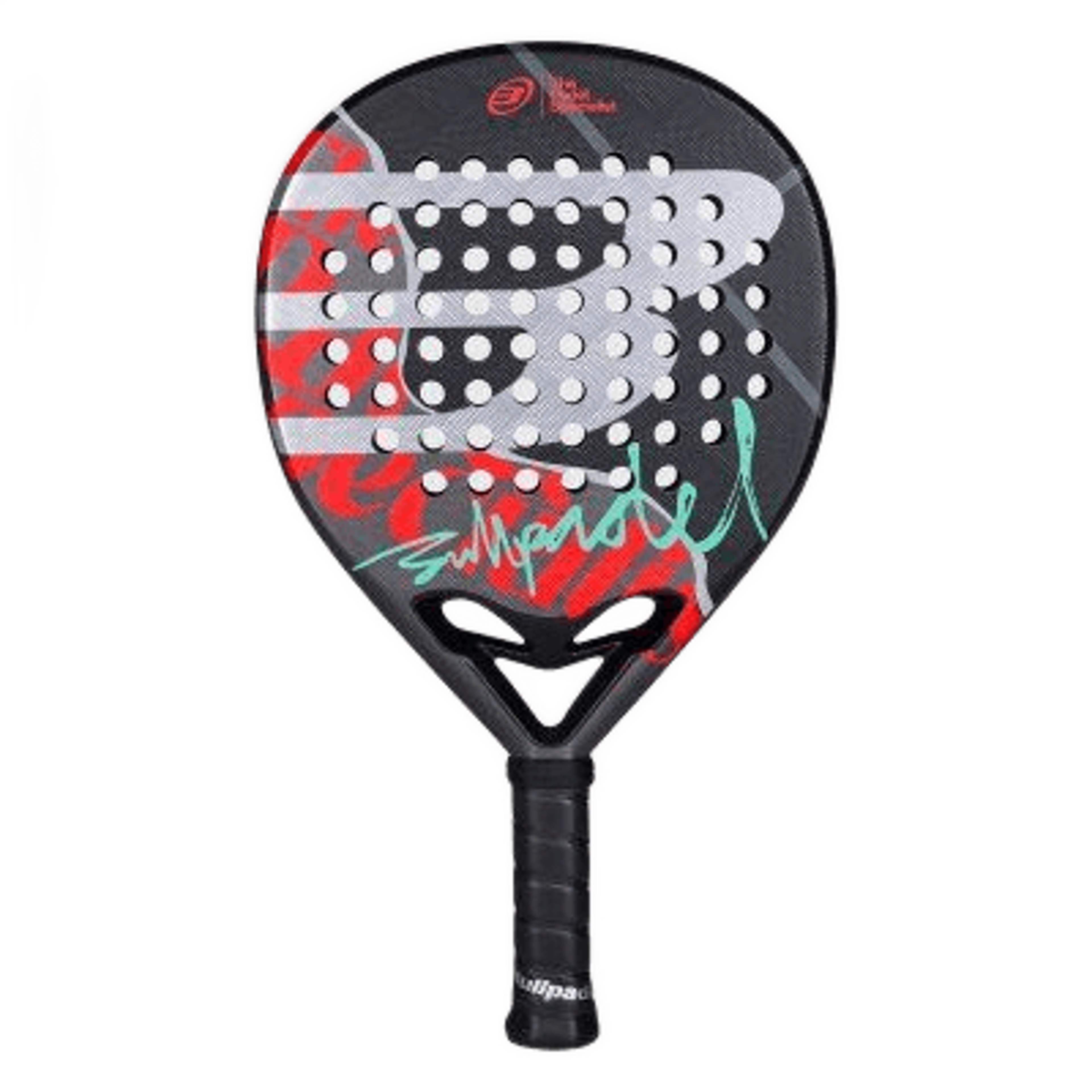
A round-frame all-rounder that keeps the ball exactly where you put it — built for players who win points through placement and patience, not pace.
Where to buy
As an Amazon Associate, Padelhost earns from qualifying purchases at no extra cost to you. This never affects our recommendations.
Amazon
Check price & availability
Link opens in a new tab · we may earn a commission
Full spec breakdown
Listing checked at publish date
Highlights
What makes this racket stand out
Round shape with medium balance gives a large, forgiving sweet spot — mishits stay in play rather than flying wide
MultiEVA's dual-density core handles both fast and slow balls differently, so rallies at varied pace don't require you to adjust your swing
Glaphite face blends fiberglass flexibility with carbon resistance, cushioning the arm on repeated volleys without feeling dead at contact
The feel
How it's built to play, by shape, core and construction — rated low / mid / high rather than on a false 1–10 scale. Higher isn't always better; it depends on the game you want.
Balance — where the weight sits
Even
Handle / low
Head / high
The spec sheet
Year
2026
Shape
Round
Level
Intermediate
Style
Control
Balance
Medium
Core
MULTIEVA
Face
Glaphite
Our verdict
What the shape, core and construction tell us about how this racket is built to play.
The short version
The Ionic Control 26 is the right racket for an intermediate right-side player who wants to build a reliable, consistent game without arm fatigue — the Glaphite face and MultiEVA core give it a comfort profile that holds up over long sessions, and the Carbon Tube frame means that comfort doesn't come at the cost of structural precision. The honest limitation is the power ceiling: round shape and medium balance cap what you can do overhead, so anyone who has already committed to an attacking left-side game will outgrow this racket quickly. At €179.99 it's a focused, well-built tool for a specific purpose — as long as that purpose matches your game.
Strengths
Intermediate players building a consistent baseline and net game who need a racket that rewards good positioning over raw power
Right-side players focused on keeping the rally alive, resetting difficult balls, and controlling the pace of the point
Keep in mind
Left-side attackers who need to finish points overhead — the round shape and medium balance won't generate the head momentum that bandeja and smash shots demand
How it's built to play
The Ionic Control 26 sits squarely in the territory most club players actually occupy: intermediate level, mixed court positions, and a game built on keeping the ball in play. Bullpadel has loaded it with technology that punches above its price bracket — Carbon Tube frame, MultiEVA core, Glaphite face — and the result is a round racket that doesn't feel cheap or compromised. What it doesn't do is lie about what it is. This is a control tool, not a finishing weapon, and the specs make that explicit.
The Carbon Tube frame is 100% bidirectional carbon wrapped around the perimeter, which gives the Ionic Control 26 a level of torsional stiffness you wouldn't normally find at this price. When the frame doesn't flex on off-centre contact, the ball goes where you aimed it — and that's exactly the property a developing player needs to build reliable patterns. Inside, the MultiEVA core runs two EVA densities in a sandwich: the outer layer is compact and reacts to fast, hard balls with a direct, powerful return; the inner layer is softer and absorbs the energy of slower balls, giving you more touch and control on drop shots and short exchanges.
The Glaphite face is Bullpadel's blend of fiberglass and carbon fibre — it's more flexible than a pure carbon surface, which means it bends slightly into the ball on contact and creates a mild spring effect. That translates to better feel on touch volleys and less vibration travelling into the wrist after impact, while still offering more responsiveness than plain fiberglass. The 3D Grain surface texture raises friction between ball and face, adding grip that lets you shape your shots with topspin or slice without needing elite wrist speed to do it. XForce reinforcement stiffens the frame walls further, so the build holds its geometry under the repeated loading of a long match session.
"Glaphite plus 3D Grain plus XForce: the Ionic Control 26 offers a coherent answer to what a developing player needs — flex for comfort, friction for spin, stiffness for consistency."
From the right side, the Ionic Control 26 does its job cleanly. The round shape positions the sweet spot in the centre of the face, which means volleys hit slightly late or slightly early still come back with reasonable pace and direction — exactly what the right-side player needs when tracking a fast cross-court drive. The medium balance keeps the head from dragging through the swing, so you can redirect balls quickly without resetting your footwork.
"The round shape and MultiEVA core together make mishits forgiving — the ball doesn't punish you for timing that's close but not perfect."
Where the racket shows its limits is when you want to take charge from the left. The combination of round shape and medium balance simply won't load the head with enough momentum for a commanding smash or bandeja. You can finish points, but the racket won't help you do it. Players who regularly attack from the back-left corner will feel they're fighting the racket rather than using it.
FAQ
How does the Ionic Control 26 compare to the Ionic Control 25?
The Ionic Control 26 upgrades the face to Glaphite — Bullpadel's carbon-fiberglass hybrid — over the standard fiberglass used in the 25. That change makes the 26 slightly more responsive on firm contacts and adds marginal stiffness, while the 3D Grain surface texture improves spin generation. If you played the 25 and found it a touch soft or lacking feedback on fast exchanges, the 26 corrects that. If the 25 felt perfect for your touch-oriented game, the difference won't be dramatic enough to justify the price jump unless you're buying new anyway.
Should I choose the Ionic Control 26 or the Ionic Power 26?
The two rackets serve different playing styles within the same Ionic lineup. The Control 26 uses a Glaphite face and MultiEVA core tuned for feel and precision — it suits players who want to dictate pace through placement, particularly on the right side. The Power 26 shifts the balance toward more aggressive ball exit speed. If you identify as a defensive or all-court player who wants consistent, repeatable shots under pressure, go with the Control. If you already generate pace naturally and want the racket to amplify it, the Power 26 is the better fit.
Is the Ionic Control 26 suitable for players with elbow sensitivity?
It sits at a lower-risk profile than most rackets at this level. The Glaphite face is more flexible than pure carbon, which reduces vibration at contact; the MultiEVA core absorbs energy across a wider range of ball speeds rather than transmitting shock directly to the handle; and the round shape with medium balance avoids the head-heavy momentum that amplifies impact forces on the arm. It isn't specifically designed as an injury-prevention racket, and no racket can guarantee that outcome — but if you're managing elbow sensitivity and want an intermediate-level racket with meaningful comfort credentials, this is a reasonable choice. A round shape with fiberglass face and low balance would be even safer if injury is the primary concern.
What does the 3D Grain surface texture actually do during play?
3D Grain is a polygonal rough texture applied to the Glaphite face that increases friction between ball and racket at the moment of contact. In practice, it means you can generate topspin or slice with less wrist speed — the surface grabs the ball and helps it roll off the face with rotation. For an intermediate player still developing clean technique, that grip assists your shot-shaping without requiring you to over-swing. It also helps on wet or humid conditions where a smoother face would lose friction and produce flatter, less controlled shots.
I'm an intermediate player who plays both sides — is this the right racket, or should I look at a teardrop instead?
If you genuinely split time between right and left and want one racket for everything, a teardrop with medium balance is technically the more versatile choice — it positions the sweet spot slightly higher, which gives a little more support on offensive shots without sacrificing the forgiveness you need on the right. The Ionic Control 26 is biased toward the defensive, right-side role. It will feel slightly underpowered if you're regularly attacking from the left. That said, if your game is predominantly about consistency and you're still building technique on both sides, the Ionic Control 26's forgiving sweet spot and arm-friendly materials make it a practical starting point — you won't be fighting the racket while you develop.
Made for elbow-conscious players.
A round-frame all-rounder that keeps the ball exactly where you put it — built for players who win points through placement and patience, not pace.
Link opens in a new tab · we may earn a commission