
Bullpadel
INDIGA PWR 25
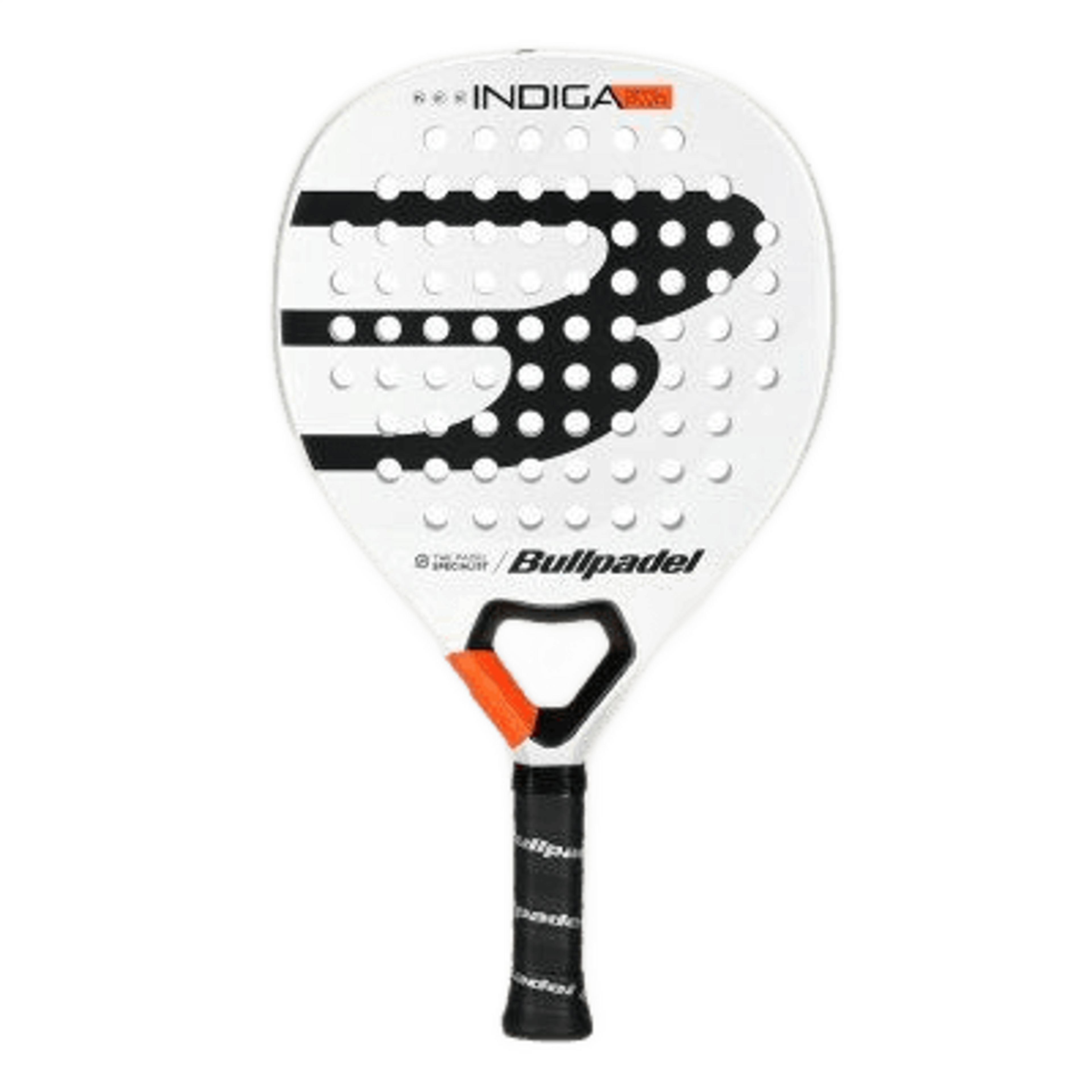
A diamond-shaped entry point built to generate power without punishing you for imperfect technique — an unusual combination at this price.
Where to buy
As an Amazon Associate, Padelhost earns from qualifying purchases at no extra cost to you. This never affects our recommendations.
Amazon
Check price & availability
Link opens in a new tab · we may earn a commission
Full spec breakdown
Listing checked at publish date
Highlights
What makes this racket stand out
Diamond shape with SoftEva core reduces the harshness typical of high-balance rackets — making overhead attempts more forgiving than the shape would suggest
Polyglass face flexes on contact to spring the ball away, compensating for the slower swing speeds typical of newer players
Carbon Tube frame keeps the structure rigid under impact so the head-heavy balance actually transfers through to the shot rather than being lost in frame flex
The feel
How it's built to play, by shape, core and construction — rated low / mid / high rather than on a false 1–10 scale. Higher isn't always better; it depends on the game you want.
Balance — where the weight sits
Even
Handle / low
Head / high
The spec sheet
Weight
360–370g
Year
2025
Shape
Diamond
Level
Beginner
Style
Power
Balance
High
Core
SoftEva
Face
Polyglass
Thickness (mm)
38
Our verdict
What the shape, core and construction tell us about how this racket is built to play.
The short version
The Indiga PWR 25 is the right choice for a casual player who wants to feel the power side of padel from day one rather than spending months on a round frame — the softened construction makes the diamond shape more accessible than it has any right to be at this level. The honest limitation is maneuverability: the high balance that helps on smashes will slow you down on reflex volleys. Anyone with elbow sensitivity should look elsewhere; this profile is not arm-friendly.
Strengths
Occasional players who want to hit with purpose rather than just keep the ball in play — the diamond shape rewards attacking intent even at low swing speeds
Club beginners who naturally gravitate toward the left side and want a racket that can eventually deliver on overhead smashes as their technique develops
Keep in mind
Players with existing elbow or shoulder sensitivity — diamond shape plus high balance increases vibration load, and this frame is not designed to absorb it
How it's built to play
The Indiga PWR 25 sits in an awkward but interesting category: a diamond-shaped racket sold at initiation level. Most beginners are steered toward round frames, and for good reason — diamonds are unforgiving. Bullpadel's answer here is to soften the construction enough that the shape doesn't punish new players while still delivering the head-heavy balance that makes overhead shots feel effortless. Whether that compromise holds up depends on what you actually want from the game.
The face is Polyglass — Bullpadel's branded fiberglass — which flexes on contact and creates a mild trampoline effect. That flex is doing important work here: it adds ball speed on slower swings, which is exactly the situation a beginner finds themselves in. A stiffer carbon face would demand technique you don't yet have. The inner core is SoftEva, a softer rubber foam that extends the dwell time at contact, giving the player a fraction more influence over direction before the ball leaves the face. Vibration absorption is reasonable for the price point, though the high-balance diamond geometry means some shock will still travel up the arm on off-centre hits. The Carbon Tube frame — 100% bidirectional carbon around the perimeter — stiffens the structure so the racket doesn't flex during the swing, which is what allows the high balance to actually transfer momentum into the shot rather than being absorbed by a wobbly frame.
"Polyglass flex plus SoftEva dwell time on a high-balance diamond: the attacking shape is accessible because the materials are doing the forgiveness work."
On court, the high balance makes itself felt immediately on overhead shots — the head drops naturally into smash position and the swing feels assisted rather than effortful. For a beginner discovering the left side, that sensation is genuinely encouraging. Volleys at net are manageable because the Polyglass face is forgiving enough on off-centre contact, though you will notice the smaller sweet spot compared to a round or teardrop when a ball catches the edge.
"The high balance makes the smash feel assisted rather than effortful — for a beginner discovering the left side, that physical cue is more useful than any technical instruction."
Where the racket shows its limits is in fast defensive exchanges: the head-heavy balance slows the racket through the air, which makes quick reactions at the net harder than they would be with a lower-balance frame. This is a racket that wants you to be on the front foot, not scrambling.
FAQ
Is the Indiga PWR 25 really suitable for beginners given that it has a diamond shape?
It is, with an important caveat. The diamond shape moves the sweet spot high in the head, which normally demands consistent technique to get the ball on that zone. Bullpadel offsets this with a SoftEva core and Polyglass face — both of which are more forgiving materials that compensate for imperfect contact. The result is a diamond that doesn't punish mishits as harshly as an advanced model would. That said, if you're brand new and have no preference for attacking play, a round-frame racket like the Indiga CTR 25 will be more consistent in early sessions.
How does the Indiga PWR 25 compare to the Indiga CTR 25?
Both sit at the same price point and same experience level, but they're built for different instincts. The PWR 25 is diamond-shaped with high balance — it's built for players who want to generate power on overhead shots and attack from the left side. The CTR 25 is a control-oriented model, likely rounder in shape with lower balance, built for players who want to keep the ball in play consistently. If you're learning and unsure, the CTR 25 is the safer starting point. If you already know you like hitting hard and want a racket that rewards that, the PWR 25 is the more satisfying choice.
Should I choose the Indiga PWR 25 or the Indiga PWR 26?
The PWR 26 is the updated 2026 version and retails at €89.99 versus €69.99 for the PWR 25. If the PWR 25 is available at its current discounted price, it represents strong value for an occasional player — the core technologies are the same generation. The PWR 26 may incorporate updated materials or construction refinements, so if you're planning to play regularly and want the current spec, it's worth the extra spend. For a player who gets on court once or twice a month, the PWR 25 does everything you need.
What does the SoftEva core actually change about how this racket plays?
SoftEva is a softer rubber foam — the ball sits against the face for a slightly longer moment before releasing, which gives you more influence over where it goes. That longer dwell time also absorbs some of the vibration at impact, which matters on a high-balance diamond where off-centre hits would otherwise send a sharp shock up the arm. Without SoftEva, a diamond at this price point would feel harsh and punishing. With it, the racket feels comfortable enough for longer sessions even at beginner level.
Is the Indiga PWR 25 safe to use if I have elbow sensitivity?
Not the ideal choice. Diamond shape, high balance, and a Carbon Tube frame combine three factors associated with higher vibration load on the arm. The SoftEva core and Polyglass face do reduce harshness, but the fundamental geometry — head-heavy diamond — means the racket still transfers more shock to the arm than a round or teardrop with low balance would. If you have existing elbow problems or are returning from injury, look at a round-frame option with soft foam core and low balance instead.
Ready to add this to your game?
A diamond-shaped entry point built to generate power without punishing you for imperfect technique — an unusual combination at this price.
Link opens in a new tab · we may earn a commission