
Babolat
Air Viper 2.6
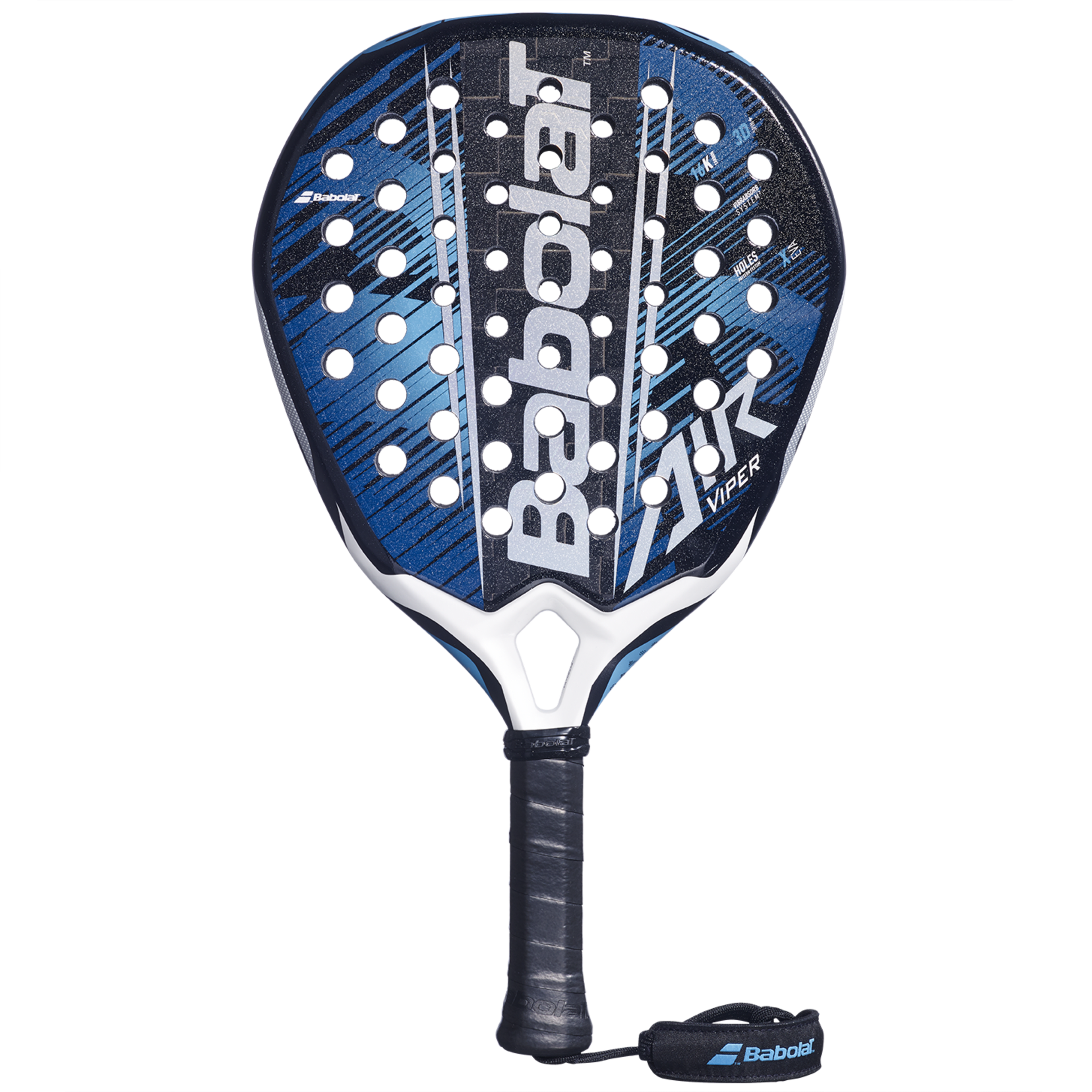
A teardrop built around speed rather than mass — for the attacker who wants to live at the net and win points with reaction time, not brute force.
Where to buy
As an Amazon Associate, Padelhost earns from qualifying purchases at no extra cost to you. This never affects our recommendations.
Amazon
Check price & availability
Link opens in a new tab · we may earn a commission
Full spec breakdown
Listing checked at publish date
Highlights
What makes this racket stand out
Teardrop shape with a medium balance keeps the sweet spot accessible while still loading weight toward the head for attacking shots
16K carbon face over X-EVA core delivers a stiff, direct response — the racket talks back on every contact, good and bad
Extra-rough 3D SPIN+ surface texture grips the ball more aggressively than a standard sanded finish, useful for víboras and topspin lobs
The feel
How it's built to play, by shape, core and construction — rated low / mid / high rather than on a false 1–10 scale. Higher isn't always better; it depends on the game you want.
Balance — where the weight sits
Even
Handle / low
Head / high
The spec sheet
Weight
345–365g
Shape
Teardrop
Level
Advanced
Style
Power
Balance
Medium
Core
X EVA
Face
16K Carbon
Thickness (mm)
38
Our verdict
What the shape, core and construction tell us about how this racket is built to play.
The short version
The Air Viper 2.6 fits the left-side attacker who plays a mobile, net-rushing game and treats speed as the main weapon — the rough face and reactive carbon make it a real víbora racket. What it won't do is plough through a heavy ball from the baseline the way a full diamond will, so deep-court finishers should look elsewhere in the Babolat range. Anyone with elbow history should test the vibration absorption before committing, because under the damping system this is still a stiff 16K build.
Strengths
Aggressive players who hunt the net and want a racket that reacts faster than it weighs
Left-side attackers who prefer a teardrop over a full diamond — they want power without sacrificing the lower sweet spot
Keep in mind
Beginners or players still building consistency — the 16K carbon face is unforgiving on mishits and the stiffness transmits straight to the arm
How it's built to play
The Air Viper 2.6 is Babolat's answer to the player who finds full diamonds too sluggish but still wants overhead pop. It sits in the teardrop category but plays faster than most — the swing weight is lower than the 355g spec suggests, and the priority is clearly reaction speed at the net over raw plough-through on heavy hits.
The face is 16K carbon, meaning a tight, smooth weave that flexes very little on contact — energy goes where you aim it, but so does any vibration from off-centre hits. To counter that, Babolat builds in the VIBRABSORB SYSTEM² with SMAC: elastomers laid into the carbon fibres at both the throat and inside the handle, which damps the worst of the buzz before it reaches the wrist. It doesn't make the racket soft — it makes a stiff racket tolerable for a longer session.
The core is X-EVA, Babolat's harder EVA blend, which is what gives the Viper its crisp rebound rather than the cushioned sink of a softer foam. Surface-wise, the 3D SPIN+ finish combines moulded relief patterns with a rough top coat — on slice and víbora shots you can feel the ball bite the face for a fraction longer, which translates into more measurable spin than a standard textured carbon would give.
At the net this is where the Viper earns its name. Block volleys come back fast and flat, and the medium balance lets you redirect a hard ball without having to muscle the racket into position. The rough face is genuinely useful on bandejas and víboras — you can shape the ball down into the corner rather than just hitting through it.
From the back of the court the picture is more mixed. The X-EVA core and stiff face mean ball speed is there on full swings, but the racket doesn't carry the ball the way a heavier diamond would on a flat smash from mid-court. Players who specialise in finishing points from deep will notice they're working harder than they would with a 370g+ frame. The trade-off is that you get to that smash position faster in the first place.
FAQ
How does the Air Viper 2.6 compare to the Babolat Viper 2024?
The standard Viper sits at a higher balance with more mass toward the head — it's the heavier, more diamond-leaning option for players who finish from deep. The Air Viper 2.6 is the lighter, more manoeuvrable cousin: same attacking intent, but tuned for quick hands at the net rather than smashes from mid-court. If you play above the service line most of the time, the Air is the better fit.
Should I choose the Air Viper 2.6 or a Bullpadel Vertex 04 at the same price?
Different rackets for different attackers. The Vertex 04 is a full diamond with high balance — heavier through the swing and more punishing on overheads, suited to a left-side player who finishes flat. The Air Viper 2.6 is a teardrop that prioritises reaction speed and spin from the rough face. Net-rushers and víbora players take the Viper; baseline smashers take the Vertex.
Is the Air Viper 2.6 safe for players with elbow issues?
It's stiffer than a fiberglass or soft-foam control racket, but Babolat has gone further than most on vibration damping — the VIBRABSORB SYSTEM² puts elastomers in both the throat and handle. That helps, but a 16K carbon face over X-EVA is still on the firmer end of the spectrum. If you have active elbow problems, a softer round racket is the lower-risk choice. If you're symptom-free with clean technique, the damping makes long sessions manageable.
Can an intermediate player handle the Air Viper 2.6?
A strong intermediate moving toward an attacking style can grow into it — the teardrop shape and medium balance are more forgiving than a full diamond. The catch is the 16K carbon face: mishits don't get softened, and the feedback is direct. If you're still landing the ball off-centre regularly, a hybrid face will serve you better until your contact point settles.
What does the 3D SPIN+ surface actually do?
It combines a moulded relief pattern on the face with an extra-rough top coat, so the ball stays on the strings a fraction longer before release. On slices, víboras and topspin lobs that translates into measurably more bite than a standard sanded carbon — you can shape the ball down into corners rather than just hitting flat through it. The texture wears with heavy use, so expect peak spin in the first few months.
Made for elbow-conscious players.
A teardrop built around speed rather than mass — for the attacker who wants to live at the net and win points with reaction time, not brute force.
Link opens in a new tab · we may earn a commission